
How to cut commercial air conditioning running costs
Practical ways to reduce air conditioning energy use in offices and shops: set points, schedules, maintenance, shading, doors and upgrades.
Short answer
The biggest savings usually come from sensible set points (around 24°C cooling, 20°C heating with a dead band between them), time schedules, clean filters and coils, closing doors or fitting air curtains, shading glazing, and replacing old fixed-speed equipment with modern inverter systems.
Quick wins
- Set cooling around 24°C and heating around 20°C, with a gap so heating and cooling never fight
- Use schedules so systems switch off out of hours
- Clean filters regularly
- Close doors and windows when cooling, or fit an air curtain on busy entrances
- Use blinds or solar film on sunny glazing
Maintenance
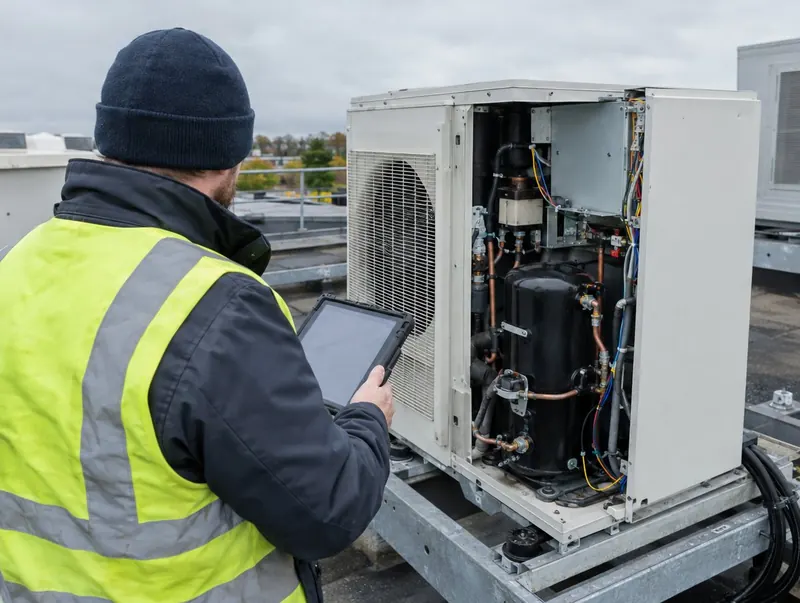
Dirty coils and filters make the system work harder. Annual servicing — more often in dusty or greasy environments — keeps efficiency up.
Upgrades
Central controls with set-point limits, occupancy sensing in meeting rooms, EC fan upgrades in fan coils and AHUs, and replacing 15–20 year old equipment can all reduce energy use. A TM44 inspection report often lists the most cost-effective measures for your building.
Questions
Does turning the air conditioning off overnight save money?
Usually yes, with a schedule that starts it early enough to reach temperature before opening.
Is it better to leave it on all day?
During occupied hours, steady operation at a sensible set point is efficient for inverter systems. Out of hours, switch off or set back.
Related services
- Planned maintenance contracts
- TM44 air conditioning inspections
- Air conditioning replacement and upgrades
- Air curtains
This guide is general information, not legal advice. Rules can change; check the current position with the relevant authority for your building.