
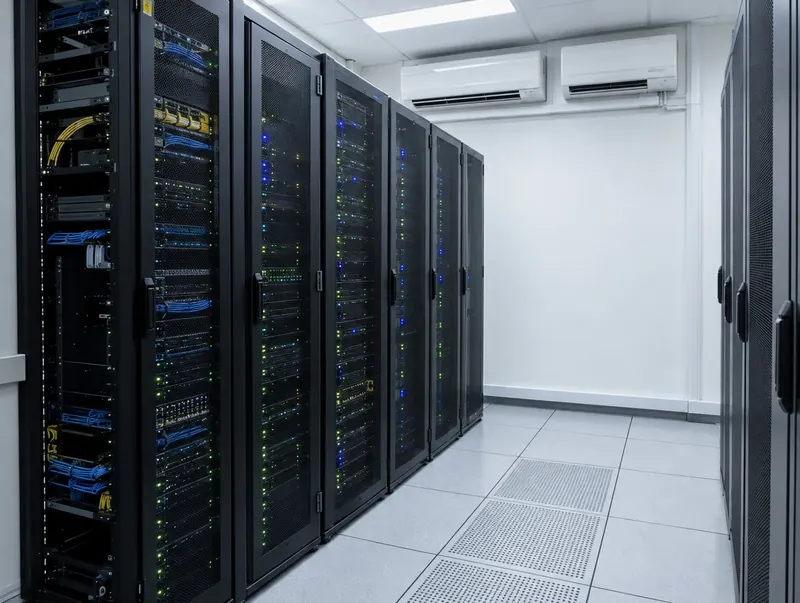
Server room cooling: temperatures, sizing and resilience
How to cool a server or comms room: recommended temperatures, sizing to the IT load, N+1 resilience, winter operation and alarms.
Short answer
Cool a server room with dedicated units sized to the IT load in kW plus a margin for growth, usually as a duty/standby (N+1) pair with automatic changeover, low-ambient controls for winter, and a temperature alarm. ASHRAE recommends equipment inlet air of about 18–27°C.
Size to the IT load
Almost all the electricity IT equipment uses becomes heat. Read the load from the UPS or PDUs, add lighting and any heat through walls, and allow for growth. A room with 4 kW of IT load needs at least 4 kW of sensible cooling, plus margin.
Build in resilience
A single unit is a single point of failure. An N+1 arrangement provides one more unit than the load needs, with a controller that rotates duty, brings in the standby on failure or high temperature, and raises an alarm.
Run all year
Comms rooms need cooling in winter. Units need low-ambient controls so they keep working when it is cold outside, and should be rated for continuous operation.
Monitor
- High-temperature alarm with email or text alerts
- Changeover and fault alarms from the controller
- Six-monthly servicing as a minimum
- Filter checks in dusty rooms
Questions
Is 21°C right for a server room?
Many small rooms are set around 21–24°C. That is within the recommended range and leaves headroom if a unit fails.
Can we use a portable unit?
Only as a temporary measure. Portable units are not designed for continuous duty and need their heat exhausting outside.
Related services
- Server room and comms room cooling
- Planned maintenance contracts
- Air conditioning repairs
- Office air conditioning
This guide is general information, not legal advice. Rules can change; check the current position with the relevant authority for your building.