
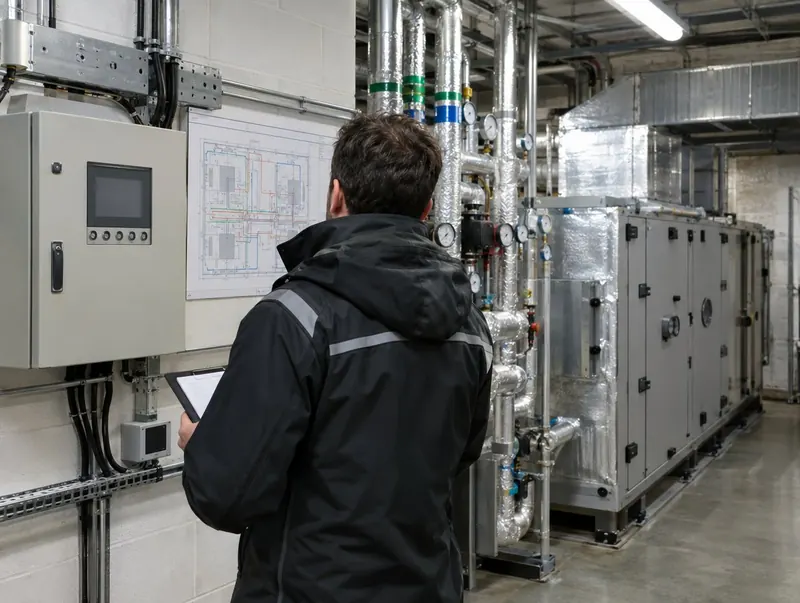
TM44 air conditioning inspections: who needs one and how often
What a TM44 air conditioning energy inspection is, the 12 kW threshold, five-yearly frequency, penalties, and the different rules in England and Wales, Scotland and Northern Ireland.
Short answer
In England, Wales and Northern Ireland, if the air conditioning you control in a building adds up to more than 12 kW of effective rated output, it needs an energy inspection by an accredited assessor at least every five years. In Scotland, systems of 12 kW or more need inspecting by an accredited expert, at intervals the expert sets. Not having a valid report can lead to a £300 penalty in England and Wales and in Northern Ireland.
What the inspection is
TM44 is the CIBSE methodology used for air conditioning energy inspections. The assessor looks at how the system is sized against the load, how it is controlled, and how well it is maintained, and recommends improvements — often low-cost changes to time controls, set points and maintenance.
The 12 kW threshold
In England, Wales and Northern Ireland the threshold applies to the total effective rated output of the air conditioning systems in a building that are under the control of the same person, so several small units can add up to more than 12 kW. In Scotland the threshold is 12 kW or more, and separate units of 12 kW or less count together only where a central control links them.
- England, Wales or NI — four separate 3.5 kW units: 14 kW in total, inspection needed
- England, Wales or NI — two 5 kW units: 10 kW, below the threshold
- Scotland — four 3.5 kW units on separate controls: each counted alone, below the threshold
- Anywhere — one VRF system of 28 kW: inspection needed
England and Wales
The Energy Performance of Buildings (England and Wales) Regulations 2012 require inspection at least every five years by an accredited air conditioning energy assessor, with the report lodged on the national register. Local weights and measures authorities (Trading Standards) enforce the rules; the penalty for not having a valid report is £300.
Scotland
Regulation 17 of the Building (Scotland) Regulations 2004 requires systems with an effective output of 12 kW or more to be inspected by an accredited expert who is a member of an approved protocol organisation. The expert sets the interval — typically from about three years for poorly maintained systems to about five years for well-maintained, efficient ones — and a new system should have its first inspection within five years of commissioning.
Northern Ireland
Systems with an effective rated output of more than 12 kW must be inspected by an accredited energy assessor within five years of installation and every five years after. The report must be lodged on the register and a copy kept; the penalty for failing to comply is £300.
What to have ready
- A list of systems with make, model and capacity
- Refrigerant type and charge
- Service and F-gas records
- Any drawings, controls information and previous reports
Questions
Is TM44 the same as an F-gas check?
No. TM44 is about energy efficiency; F-gas checks are about refrigerant leaks. You may need both.
Do new systems need an inspection straight away?
No. The first inspection is due within five years of installation (or commissioning, in Scotland).
Sources
- Scottish building standards: 0.17 continuing requirements
- Belfast City Council: energy performance of buildings
- Designing Buildings: air conditioning inspection
Related services
- TM44 air conditioning inspections
- F-gas leak checks and records
- Planned maintenance contracts
- Air conditioning replacement and upgrades
This guide is general information, not legal advice. Rules can change; check the current position with the relevant authority for your building.